
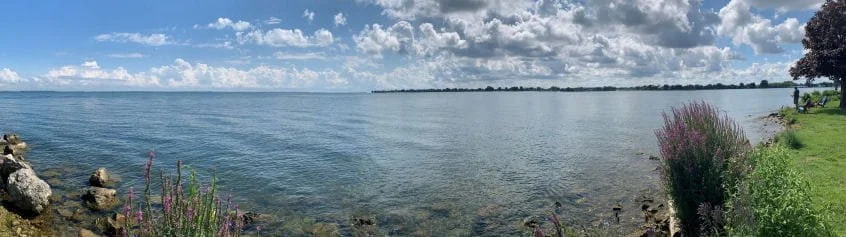
The Save Lake St. Clair movement didn’t begin in a boardroom or through government planning—it began with residents who saw changes happening to the lake they love and refused to stay silent.
Decades in the Making:
Concerns about Lake St. Clair’s health go back decades. As Southeast Michigan quickly grew, so did the strain on its infrastructure. Aging sewer systems, increased development, and runoff from surrounding areas all contributed to declining water quality.
While efforts were made over the years to address pollution and protect LSC, many residents felt the impact firsthand—especially after heavy rains, when discharges and runoff would affect the lake’s clarity, shoreline conditions, and overall ecosystem.
The Turning Point: Early 2010s:
Around 2013–2014, shoreline communities like St. Clair Shores and Harrison Township began noticing a more visible shift:
Increased muck and algae buildup
More frequent beach closures
Murky, discolored water following storm events
Frustrated by what they were seeing—and what they felt was a lack of urgency—residents took action. What started as conversations among neighbors quickly moved to social media, where a growing number of people began sharing photos, concerns, and firsthand experiences.
A Facebook group called “Save Lake St. Clair” was created by local resident Mike Gutow with over 35k followers.
From Conversation to Movement:
What made this movement different was simple—it came from people who live here, who understand what this lake means, and the nearly $3 billion impact it has on Michigan’s economy.
As awareness grew, so did the pressure:
Residents began attending public meetings
Questions were raised about regional infrastructure and water management
Local and state officials were pushed to acknowledge and address the issue
The movement gave a unified voice to a simple but powerful message:
Lake St. Clair is also known as the heart of the Great Lakes and needs to be protected.
Where We Are Today:
Today, Save Lake St. Clair represents more than a moment in time—it represents a continued commitment.
The movement has helped elevate water quality issues to the forefront of public discussion, driving:
Increased attention to sewer infrastructure and overflow prevention
Greater transparency from agencies and municipalities
Ongoing advocacy for policies and funding that protect the lake
But the work is far from finished:
Save Lake St. Clair is proof that real change starts at the local level.
Government didn’t create it—it was created by residents who care deeply about their homes, their community, and their future.
And it continues today because those same residents refuse to give up.