
Videos & Education
These mats are confirmed to harbor high concentrations of E. coli and other fecal indicator bacteria, often at levels 10 times higher than the surrounding water.
Purpose: CSS was initially designed to manage both rainwater and wastewater efficiently, with
overflow outlets to prevent backups during extreme weather events.
Last significant improvement to reduce CSOs was at the George W. Kuhn done in 2006 by increasing storage capacity to 124 million gallons and adding enhanced screening and disinfection processes
Management Challenges: Much of the existing CSS infrastructure is aging, requiring significant repairs and modernization to function effectively. The high cost of upgrading and maintaining the CSS poses a major challenge, with limited funding available for large-scale infrastructure projects.
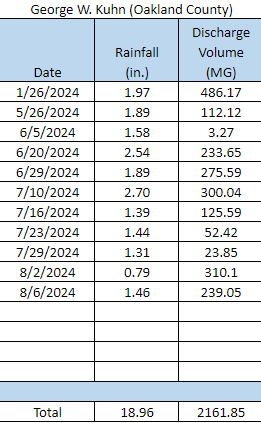
Above is the amount that Oakland County has discharged ^
The mats can be so thick (up to 11 feet deep in some canals) that they can mimic solid ground creating a significant drowning hazard for anyone who steps on them.